MSP Automation in 2026: How AI-Powered IT Service Management Is Helping MSPs Scale Without Hiring

If you're running an MSP in 2026, you're caught in a squeeze that's getting tighter every quarter. Your clients expect faster response times, 24/7 coverage, and proactive IT management. Your ticket volume has tripled over the past five years. And the technicians you need to handle that volume? Fifty-two percent of MSPs say hiring is their primary struggle, with 68% of IT leaders reporting major hurdles in recruiting cloud and cybersecurity talent.
The math is brutal: more tickets, fewer qualified people to work them, and clients who will switch providers the moment response times slip past 30 minutes. This isn't a staffing problem you can hire your way out of. It's an operational model problem that requires a fundamentally different approach.
That approach is AI-powered automation, and it's no longer the bleeding edge. It's the dividing line between MSPs that are scaling profitably and those watching their margins erode while their best technicians burn out.
In this guide, we'll break down exactly where automation delivers the highest ROI for MSPs, the metrics that prove it, and how to implement an automation strategy that transforms your operations without disrupting the service your clients depend on.
Nimbus Marlowe is the AI operations layer for personal-injury law firms, starting with intake. ## The MSP Scaling Crisis: Why Manual Operations Are No Longer Sustainable
Let's quantify the problem before we talk about solutions. Understanding these numbers isn't academic — they're the baseline you need to calculate the ROI of automation for your specific operation.
The Ticket Volume Problem
MSPs handle three times more tickets today than they did five years ago. That growth isn't slowing down. As clients adopt more cloud services, more endpoints, and more SaaS applications, the surface area of IT management expands exponentially. Every new tool your client deploys is another potential source of tickets.
Meanwhile, the average technician handles 15 to 25 tickets per day. When volume spikes beyond that range, the cascade is predictable: response times slip, SLA compliance drops, client satisfaction tanks, and your best people start updating their resumes.
67% of MSP tickets are repetitive, low-value tasks. The average technician spends 40% of their day on ticket triage and administrative tasks — not actually solving problems.
The Talent Crisis
The workforce constraint is the single biggest bottleneck on MSP growth. Demand for cloud architects, cybersecurity analysts, and AI specialists far outstrips supply. Smaller MSPs can't compete with enterprise salaries, and the problem is compounding: 73% of MSPs report difficulty hiring and retaining skilled technicians.
This creates a vicious cycle. Understaffed teams handle more tickets per person, which increases burnout, which increases turnover, which makes you more understaffed. The only way to break the cycle is to reduce the number of tickets that require human intervention in the first place.
The Margin Compression Problem
Manual ticket handling costs an average of $85 per ticket. For an MSP processing 2,000 tickets per month, that's $170,000 in monthly operational cost before you factor in overhead. Compare that to MSPs using advanced analytics and automation, who average $22 per resolved ticket. The difference in unit economics is staggering, and it compounds across every client, every month.
Revenue leakage adds another layer. Without automated billing and provisioning, MSPs consistently underbill for consumed services, miss billable time entries, and fail to reconcile usage against contracts. In a business model built on recurring revenue, even small leakage percentages translate to significant annual losses.
The Client Expectation Gap
The bar keeps rising. Sixty-seven percent of clients switch MSP providers when initial response time exceeds 30 minutes. They expect proactive monitoring that catches issues before they call. They expect seamless onboarding when they add new employees or locations. And increasingly, they expect the same digital-first experience from their IT provider that they get from consumer technology companies.
Meeting these expectations with manual processes requires heroic effort from your team. Meeting them with automation requires smart systems.
Where Automation Delivers the Highest ROI for MSPs
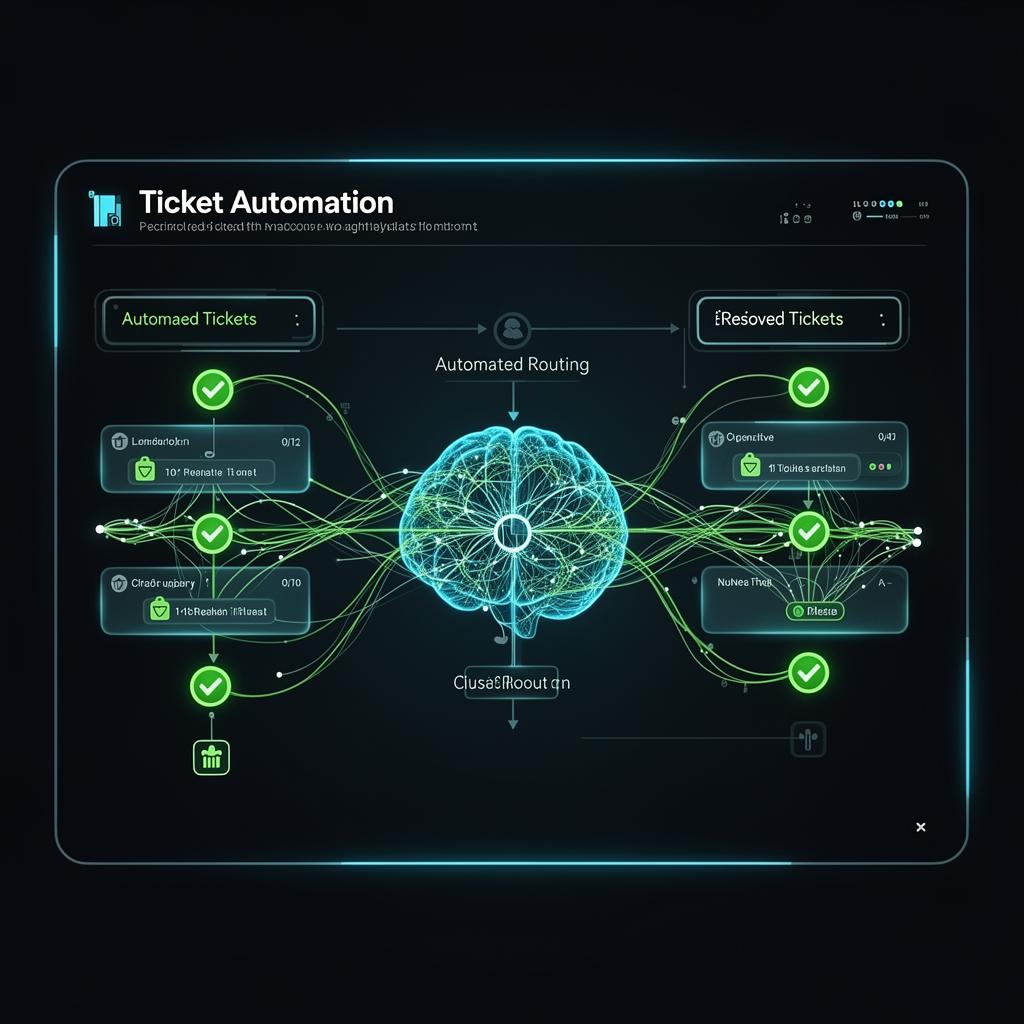
Not all automation is created equal. The MSPs seeing the biggest returns are strategic about where they deploy automation first, focusing on high-volume, high-cost processes where AI can operate independently or with minimal human oversight.
1. Intelligent Ticket Triage and Auto-Resolution
This is where most MSPs should start, because it addresses the highest-volume pain point immediately.
What it does: AI-powered ticket systems automatically categorize incoming tickets by type, priority, and complexity. For common issues — password resets, permission requests, software installations, printer problems — the system can resolve the ticket entirely without technician involvement.
The impact: MSPs using AI-powered ticketing automation report 30 to 40% of tickets resolved without any technician involvement. For a 2,000-ticket-per-month operation, that's 600 to 800 tickets that never touch a human queue. At $85 per manual ticket, you're looking at $50,000 to $68,000 in monthly savings, or the equivalent of adding 3 to 4 technicians without a single hire.
What good looks like: The system doesn't just categorize — it takes action. A password reset ticket triggers an automated workflow that verifies the user's identity, resets the password, delivers the new credentials securely, and closes the ticket with full documentation. A "my Outlook is slow" ticket triggers automated diagnostics, identifies the root cause (maybe a bloated OST file or an outdated add-in), applies the fix remotely, and confirms resolution with the end user.
2. Proactive Monitoring and Self-Healing Infrastructure
Reactive IT support is a losing game. By the time a user submits a ticket, the problem has already impacted their productivity. Proactive monitoring flips this model entirely.
What it does: AI-powered monitoring continuously analyzes system health across all client environments, detecting anomalies before they become outages. Self-healing automation takes it a step further: when a known issue is detected, the system automatically applies the fix without waiting for a ticket or a technician.
The impact: MSPs implementing predictive analytics reduce emergency escalations by 43% and client downtime by 37%. Reduced downtime directly correlates to higher contract renewal rates — Gartner research shows a 19% increase in renewals for MSPs using predictive maintenance. For your bottom line, fewer emergencies mean fewer after-hours calls, less overtime, and more predictable operational costs.
What good looks like: A disk approaching capacity triggers automated cleanup scripts and alerts the account manager. A server showing memory leak patterns gets proactively rebooted during a maintenance window before users notice degradation. A failed backup job is automatically retried, and if it fails again, a ticket is created with full diagnostic context so the technician can resolve it in minutes instead of hours.
3. Automated Client Onboarding
Client onboarding is one of the most labor-intensive processes in MSP operations, and it sets the tone for the entire relationship. A slow, disorganized onboarding experience signals to new clients that they made the wrong choice.
What it does: Automation transforms onboarding from a multi-week project into a streamlined, repeatable workflow. New client environments are provisioned automatically: user accounts created, security policies applied, monitoring agents deployed, backup configurations set, and documentation generated — all triggered from a single onboarding template.
The impact: Automated onboarding reduces time-to-value from weeks to days, improves consistency (every client gets the same thorough setup), and frees your senior engineers from repetitive configuration work so they can focus on the custom integrations and strategic planning that actually require their expertise.
What good looks like: You sign a new 50-person client on Monday. By Tuesday, every user has credentials, email is configured, endpoints are monitored, backups are running, and the client receives an automated welcome packet with documentation, support contacts, and a portal login. Your team spent their time on the network assessment and strategic recommendations, not clicking through setup wizards.
4. Automated Billing and Revenue Assurance
Billing complexity is a persistent MSP pain point, and it directly impacts profitability. When you're managing dozens of vendors, hundreds of licenses, and multiple pricing models across your client base, manual billing almost guarantees revenue leakage.
What it does: Automated billing systems track every billable hour from every touchpoint, reconcile usage against contracts, generate accurate invoices, and flag discrepancies before they become disputes or losses.
The impact: Automating ticket routing and patch management alone can reduce labor costs by 15 to 20%. Automated billing eliminates the underbilling that costs most MSPs 5 to 10% of potential revenue. For a $2 million MSP, that's $100,000 to $200,000 recovered annually just by billing accurately for services already delivered.
What good looks like: When a technician works a ticket, time is automatically captured and categorized. When a client adds a new user, the license count updates and next month's invoice reflects the change. When usage exceeds a contracted threshold, the system flags it for review rather than letting it slip through unbilled.
5. AI-Powered Security Operations
With 60% of organizations citing cybersecurity as their primary reason for partnering with an MSP, your security operations are a critical differentiator. But security is also one of the most resource-intensive services to deliver manually.
What it does: AI-driven security automation handles threat detection, alert triage, and initial response at machine speed. Instead of your security team reviewing thousands of alerts daily (most of which are false positives), AI filters noise, correlates events, and escalates only the incidents that require human judgment.
The impact: Automated threat detection and response dramatically reduces mean time to detect (MTTD) and mean time to respond (MTTR). For your team, it means spending their time on threat hunting and strategic security improvements rather than drowning in alert fatigue.
The Numbers That Matter: MSP Industry Statistics for 2026

The MSP industry is in a period of unprecedented growth — but that growth is unevenly distributed. These are the data points that separate the MSPs capturing market share from those losing it.
- •$511B — Projected global MSP market value by 2029, growing from $365B in 2023
- •13% — Year-over-year growth in IT managed services revenue in 2025
- •52% — MSPs identify hiring as their primary struggle
- •67% — MSP tickets are repetitive, low-value tasks prime for automation
- •$85 vs. $22 — Cost per ticket: manual vs. automated (74% reduction)
- •30-40% — Tickets resolved without technician involvement using AI
- •43% — Reduction in emergency escalations with predictive analytics
- •72% — US SMBs plan to increase managed IT spending
Building Your MSP Automation Strategy: A Phased Implementation Approach
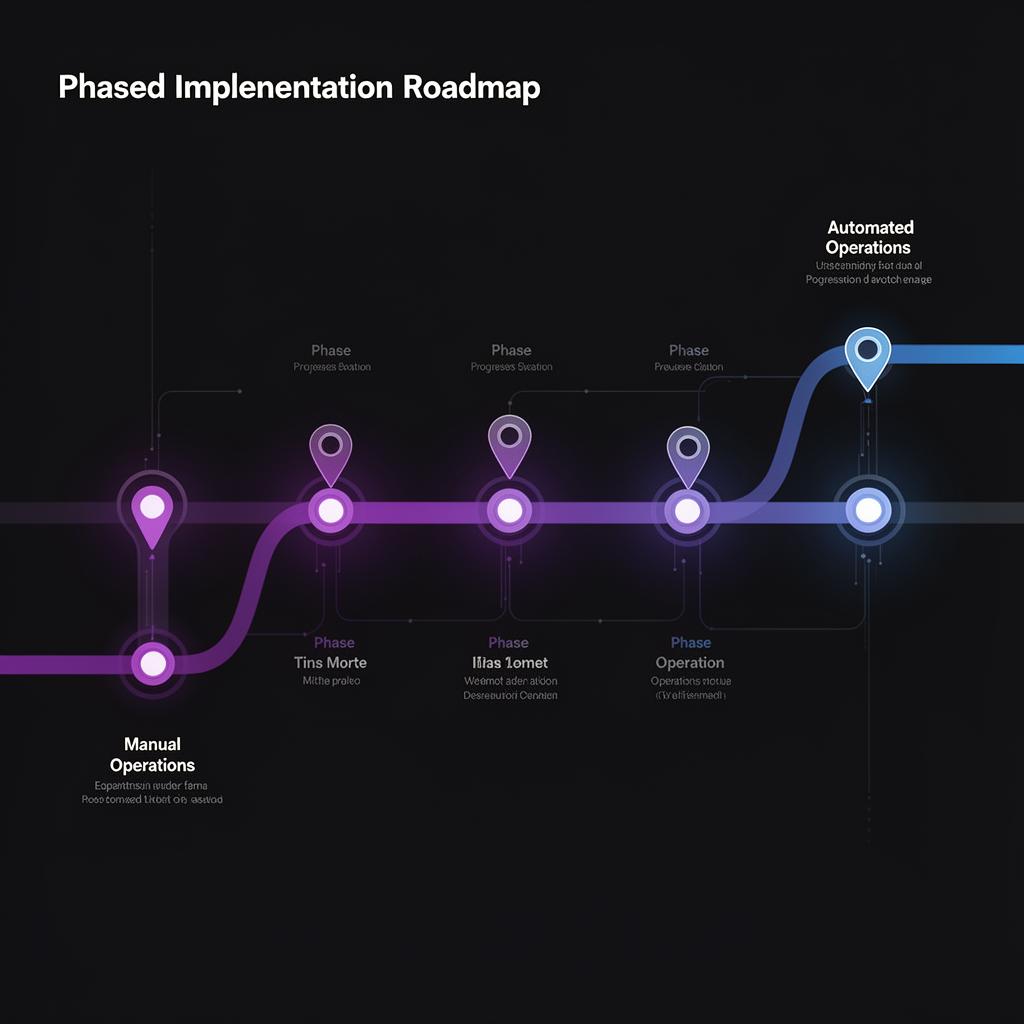
The MSPs that fail with automation usually fail for the same reason: they try to automate everything at once. The ones that succeed follow a phased approach that builds confidence, proves ROI, and creates momentum.
Phase 1: Automate the Queue (Weeks 1–4)
Start where the volume is highest and the complexity is lowest.
- •Deploy AI-powered ticket categorization and routing
- •Implement auto-resolution for your top 5 to 10 most common ticket types
- •Set up automated SLA tracking and escalation alerts
Success metric: 20% reduction in average response time within 30 days.
Phase 2: Proactive Over Reactive (Weeks 5–12)
Once your ticket queue is under control, shift focus from responding to issues to preventing them.
- •Deploy AI-driven monitoring with anomaly detection
- •Configure self-healing scripts for common infrastructure issues
- •Build automated health reports for clients
Success metric: 15% reduction in total ticket volume as proactive automation catches issues before users report them.
Phase 3: Scale the Business (Months 4–6)
With operational efficiency gains in place, focus automation on growth enablers.
- •Automate client onboarding with templated provisioning workflows
- •Implement automated billing reconciliation and revenue assurance
- •Build automated QBR data packages
Success metric: Ability to onboard a new client in 48 hours or less. Zero revenue leakage from billing errors.
Phase 4: Intelligent Operations (Ongoing)
This is where automation evolves into intelligence.
- •Implement AI-powered capacity planning
- •Deploy automated security posture assessments
- •Use ticket trend analysis to identify systemic issues
Success metric: Shift from cost center to strategic advisor in client relationships.
The Nimbus AI Advantage: Automation Built for How MSPs Actually Operate
Most automation tools in the MSP space solve one piece of the puzzle: ticketing, or monitoring, or billing. Nimbus AI was built to connect these workflows into a unified automation platform that mirrors how MSP operations actually run.
Unified Automation Engine
Nimbus AI doesn't treat tickets, monitoring, and billing as separate systems. When a monitoring alert fires, it can create a ticket, trigger an auto-resolution workflow, log the time, update the client's billing record, and document the resolution, all in a single automated flow.
AI-Powered Ticket Intelligence
Our ticket automation goes beyond keyword matching. Nimbus AI analyzes ticket content, client history, device context, and resolution patterns to make intelligent routing and resolution decisions. The system learns from your technicians' actions, getting smarter over time.
MSP-Native Design
Nimbus AI was built for multi-tenant MSP operations from day one. Client isolation, technician permissions, SLA management, and per-client reporting are core architecture — not afterthoughts.
Transparent, Scalable Pricing
AI features run on a credit-based system that scales with your operation. No per-technician licensing traps that punish you for growing your team.
Frequently Asked Questions About MSP Automation
What is MSP automation and why does it matter in 2026?
MSP automation refers to the use of AI and workflow technology to handle repetitive IT service management tasks without human intervention. In 2026, it matters more than ever because MSPs are handling three times more tickets than five years ago, 52% struggle with hiring, and manual ticket handling costs $85 per ticket compared to $22 with automation.
How much can MSP automation reduce operational costs?
The impact varies based on your current maturity and ticket volume. Automating ticket routing and patch management reduces labor costs by 15 to 20%. AI-powered ticket resolution handles 30 to 40% of tickets without technician involvement. MSPs using advanced analytics average $22 per resolved ticket versus $85 for manual handling — a 74% reduction.
Will automation replace MSP technicians?
No. Automation replaces the tasks that technicians shouldn't be doing in the first place — password resets, ticket categorization, status updates, and routine maintenance scripts. The goal is to elevate your team from ticket machines to strategic IT advisors.
What should MSPs automate first?
Start with high-volume, low-complexity ticket categories. Password resets, permission changes, software installations, printer issues, and basic connectivity troubleshooting are typical starting points.
How do I measure the ROI of MSP automation?
Track three core KPIs: cost per ticket, technician utilization rate (target 75-85%), and SLA compliance rate. Most MSPs see measurable improvement within 30 to 60 days of deploying ticket automation.
Is MSP automation secure for client environments?
Security is non-negotiable. Any automation platform you deploy must meet enterprise-grade security standards: SOC 2 compliance, multi-tenant architecture with proper client isolation, role-based access controls, and comprehensive audit logging.
The Bottom Line
The MSP industry is projected to grow past $500 billion by the end of the decade. But that opportunity flows disproportionately to MSPs with the operational capacity to capture it. If your team is buried in a ticket queue, you can't pursue new clients.
Automation isn't about replacing people. It's about building the operational infrastructure that lets your people do their best work, your clients receive exceptional service, and your business grow without the constraints of manual operations.
The MSPs thriving in 2026 aren't necessarily the largest or the oldest. They're the ones who recognized that manual operations are unsustainable and built systems that scale.
Put your firm's operations on autopilot. Reviewed by you.
Nimbus Marlowe is the AI operations layer for personal-injury firms. The CRM is free, pricing is flat and per-unit, and every output is a draft your attorneys review and adopt.